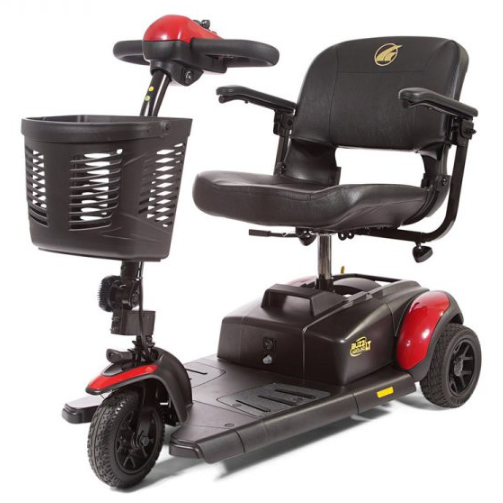
Watching a parent slow down is never easy. One of the hardest conversations families have is the one about mobility — specifically, whether a parent needs help getting around that they are not yet willing to ask for. A mobility scooter can restore independence, reduce pain, and make everyday life better. But how do you know when it is time to bring it up?
Here are five signs that a mobility scooter might genuinely improve your parent’s daily life.
1. They Are Avoiding Outings They Used to Enjoy
This is often the first sign, and families miss it because it happens gradually. A parent who used to love shopping, attending church, or walking at the park starts making excuses. They say they’re tired, the weather isn’t right, or they just don’t feel like it.
Often the real reason is that they don’t have the physical stamina to walk through a large store or cover the distance involved. A scooter removes that barrier entirely. We hear from caregivers all the time: “My mom went back to the grocery store for the first time in two years.”
2. Simple Errands Are Taking Much Longer — or Requiring Your Help
If you have noticed that your parent needs to stop and rest frequently during tasks that used to be easy, or if they now need you to drive them to places they once handled independently, their walking endurance has decreased significantly.
A mobility scooter does not replace walking entirely — it supplements it. Many scooter users still walk around their home and yard. But for longer distances — a shopping trip, a medical appointment, a family gathering — the scooter fills the gap and preserves their independence.
3. They Have Mentioned Fatigue, Joint Pain, or Breathlessness When Walking
Sometimes parents will mention these things in passing without framing them as a problem. “My knees have been bothering me.” “I get out of breath walking to the mailbox.” “I just feel worn out.”
These are not complaints to dismiss. They are signs that walking has become effortful in a way it was not before. A scooter allows your parent to conserve energy for the activities they want to do while taking the strain off joints and lungs.
4. You Have Noticed Them Using Walls, Furniture, or Shopping Carts for Balance
Watch how your parent moves through a space. Are they regularly touching the wall as they walk down a hallway? Leaning heavily on a shopping cart? Reaching for the back of a chair before sitting?
This kind of unconscious bracing tells you they do not fully trust their balance on its own. A mobility scooter does not solve a balance problem — a walker or cane may be better for balance support specifically — but if the issue is combined fatigue and some unsteadiness, a scooter can reduce the distance they have to manage on foot significantly.
5. Their Doctor Has Raised Mobility Concerns
If a doctor, physical therapist, or other healthcare provider has mentioned limited mobility, falls risk, or the need to “reduce activity levels,” that is a direct prompt to consider assistive equipment. A scooter can actually help a parent remain more active overall by making the activities they love accessible again, rather than simply staying home.
What to Do Next
The best first step is to let your parent try one. There is no pressure, no commitment, and no better way to know if it is the right fit. At Mobility America Online in Lakeland, FL, we have a range of 3-wheel and 4-wheel scooters available to try in our showroom. Our team takes time to match the right model to the person — we never rush a decision this important.
Call us or stop by. We serve families across Central Florida including Lakeland, Winter Haven, Plant City, Auburndale, Bartow, and the greater Tampa region.