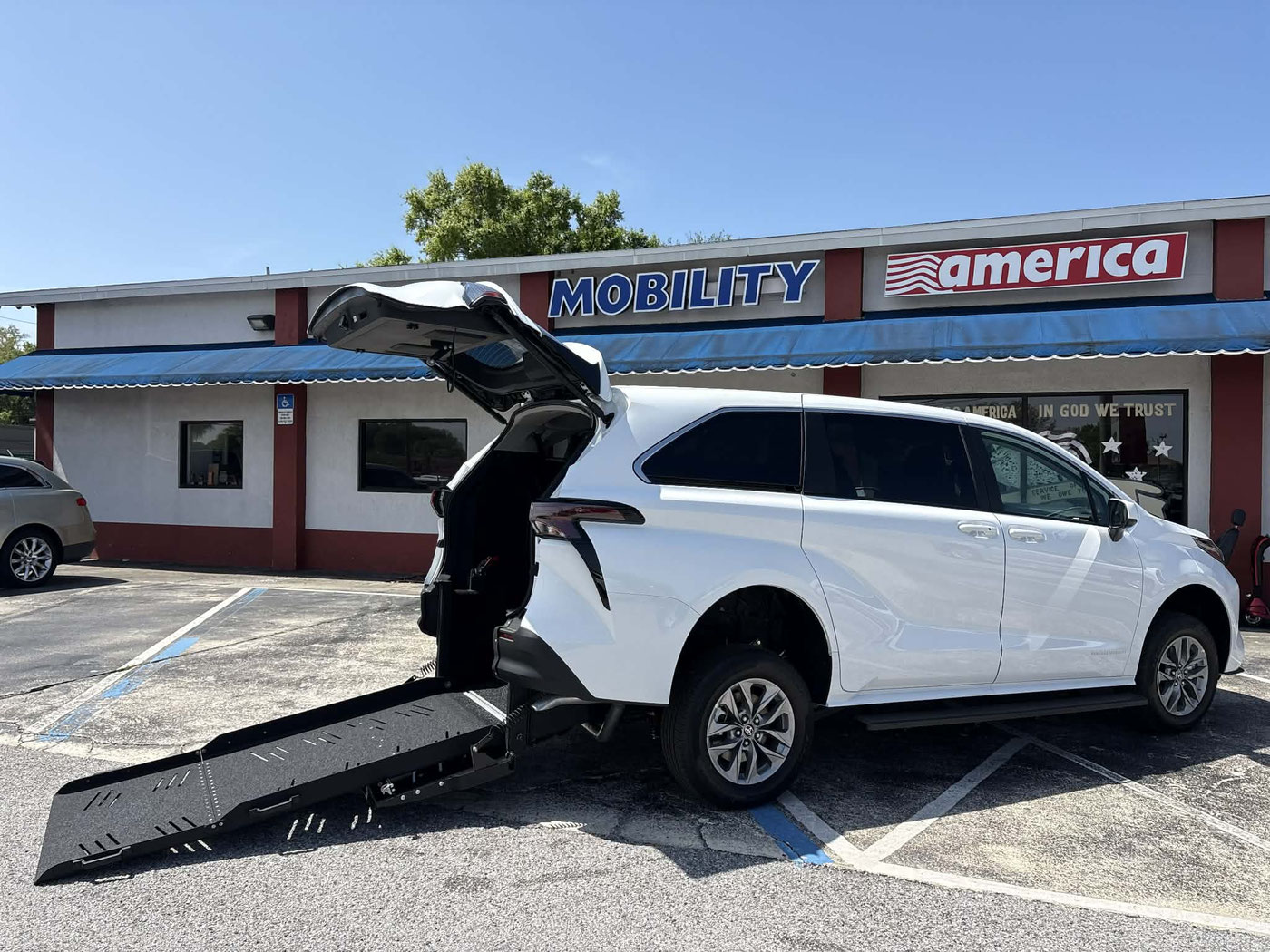
If you are shopping for a wheelchair accessible van, one of the first decisions you will face is the type of entry: side entry or rear entry. Both work well — but they suit different situations, and choosing the wrong one can mean a van that does not fit your life as well as it should.
Here is a plain-English breakdown of the difference, with the questions you should ask before you decide.
Side Entry Vans: More Independence for the User
A side entry conversion opens the sliding door on the side of the van and extends a ramp — either a fold-out ramp or an in-floor power ramp. The wheelchair user rolls up the ramp and can position themselves in the front passenger seat area, or in some cases, the driver’s position with adaptive hand controls.
The key advantage of a side entry van is independence. The wheelchair user can transfer to any seat, and with the right adaptations, can drive the vehicle themselves. It also means the ramp extends to a sidewalk or parking space rather than behind the vehicle, which is often more practical in busy car parks.
Side entry conversions are generally more expensive than rear entry models because the engineering is more complex. The most common brands for side entry conversions — BraunAbility and VMI — are both manufacturers we work with at Mobility America Online.
Rear Entry Vans: More Affordable, Great for Passengers
A rear entry conversion uses the back of the van. The tailgate opens and a ramp folds out from the rear bumper. The wheelchair user rolls in and positions at the back of the vehicle.
Rear entry vans are typically less expensive than side entry, and the conversion is somewhat simpler mechanically. They are an excellent choice when the wheelchair user will always travel as a passenger — not as a driver — and when a caregiver is available to load and unload.
The main limitations: the wheelchair user always sits at the rear of the vehicle (not next to a caregiver in the front), and the ramp extends behind the van, which can be difficult in tight parking spaces or garages.
The Questions to Ask
Does the wheelchair user want or need to drive? If yes, side entry is the path. If they will always travel as a passenger, rear entry is a viable and often more affordable option.
What is the parking situation at home and at the places you visit most? If you regularly park in a tight garage or a small lot, rear-entry ramps extending behind the vehicle can be awkward. Side entry uses the parking space beside the van, which is usually more manageable.
What is your budget? Rear entry vans can be meaningfully less expensive. If budget is a significant factor and independent driving is not required, rear entry may be the right practical choice.
Who will be loading and unloading? Rear entry requires someone to assist from behind the vehicle. Side entry allows greater self-sufficiency.
Our Recommendation: See Both Before You Decide
The best way to make this decision is to sit in both types of van and feel the difference. At our Lakeland showroom, we stock both side entry and rear entry accessible vehicles. Our team will walk you through each one without any pressure — we want you to find the right fit, not the most expensive option.
We carry BraunAbility and VMI conversions and are an authorized dealer for both. If you have a specific make and model in mind, call us — we can often source it if we do not have it in stock.